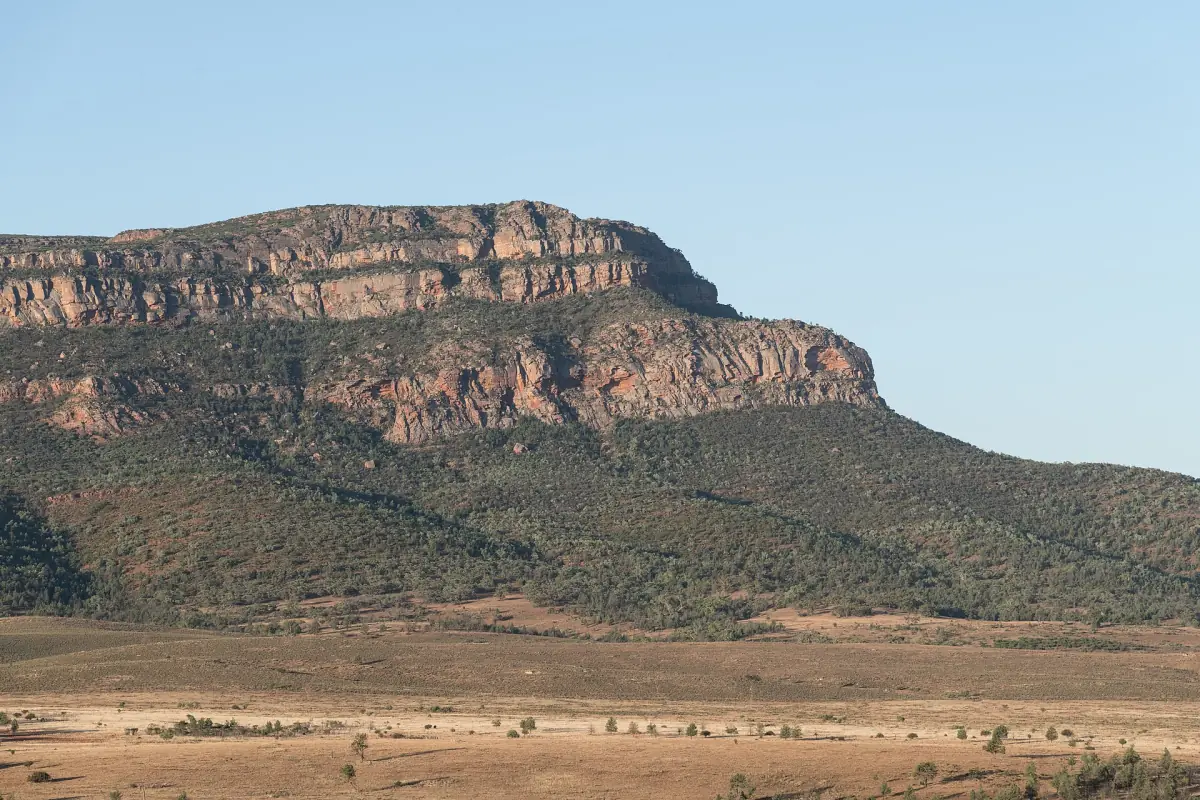
Port Augusta weather at a glance
Port Augusta is dry and sunny, with a big gap between summer and winter. The Bureau of Meteorology station at Port Augusta Aero gives monthly averages for 2001 to 2026. In January the average daily high is 34.2 °C. In July the average daily low drops to 4.7 °C. No month averages more than 24.0 mm of rain.
These figures describe the town and its airport. They are monthly averages and not records, daily values or a forecast. The Flinders Ranges and Mount Remarkable are higher and can feel different, so treat the table as a planning guide.
Monthly temperatures and rainfall
Average daily high and low in °C and average rainfall in mm. Source: Bureau of Meteorology, Port Augusta Aero (station 018201), table of 15 October 2026.
| Month | Average high | Average low | Rainfall |
|---|---|---|---|
| January | 34.2 °C | 19.6 °C | 14.1 mm |
| February | 33.2 °C | 18.9 °C | 19.3 mm |
| March | 30.7 °C | 17.0 °C | 13.8 mm |
| April | 26.7 °C | 13.0 °C | 18.8 mm |
| May | 21.6 °C | 8.6 °C | 17.3 mm |
| June | 18.1 °C | 6.0 °C | 24.0 mm |
| July | 17.9 °C | 4.7 °C | 17.3 mm |
| August | 20.1 °C | 5.6 °C | 15.9 mm |
| September | 24.1 °C | 8.6 °C | 17.0 mm |
| October | 27.2 °C | 12.0 °C | 18.1 mm |
| November | 29.9 °C | 15.3 °C | 22.1 mm |
| December | 32.2 °C | 17.4 °C | 24.0 mm |
Tours from Port Augusta and the Flinders Ranges
Day trips and multi-day tours in the region, with live prices and availability.
The best time to visit Port Augusta
A planning aid drawn from the table above, not an official rating.
April to October: the easier months for walking
From April to October the average daily highs run from 17.9 to 27.2 °C. These are the cooler months, which suit hiking in the Flinders Ranges, the Alligator Gorge walks and a long day at the Arid Lands Botanic Garden. Expect cold mornings: the average low is 6.0 °C in June, 4.7 °C in July and 5.6 °C in August.
November to March: hot, with early starts
The average high is 29.9 °C in November and reaches 34.2 °C in January. Plan walks and drives for the early morning, keep to shaded stops at midday, and carry more water than you expect to need.
Packing for the gap between day and night
The difference between the average high and low is 14.6 °C in January and 13.2 °C in July. In winter that means a mild afternoon and a cold start, so bring layers and a warm hat for early walks. In summer bring sun protection, a wide-brimmed hat and a refillable water bottle.
Rain is light but not absent
The wettest months, June and December, average 24.0 mm. The driest, March, averages 13.8 mm. Rain does not stop a trip here, but unsealed roads in the Ranges can be affected after storms, so check park alerts before you drive them.
Flinders Ranges access and fees →Heat, fire danger and water
Rules that follow the season and the day.
Catastrophic fire danger
On days with Catastrophic Fire Danger, the Australian Arid Lands Botanic Garden and its centre are closed, and all walking trails in Ikara-Flinders Ranges National Park are closed. The backpack campgrounds in Mount Remarkable National Park close during the Fire Danger Season.
Botanic garden hours →Campfires
One Port Augusta caravan park bans campfires from 1 November 2026 to 30 April 2027. Management can also ban them outside those dates when conditions require.
Caravan parks →Water and wildlife
The national parks service gives a guideline of 1 liter of water for every hour of physical activity. Water supply in a park is not guaranteed, so carry your own. Wildlife is more active at dawn and dusk, so drive slowly then.
El Niño years
The German Foreign Office notes for 2026 that El Niño conditions can bring higher temperatures, a greater heat and fire risk and possible smoke in parts of the interior. Check current weather warnings and park alerts before each leg of a trip.
Plan the rest of your trip
Where the seasons fit.
Port Augusta weather: frequently asked questions
When is the best time to visit Port Augusta?
The cooler months from April to October suit walking and driving best, with average highs of 17.9 to 27.2 °C. This is a planning guide drawn from monthly averages. Summer trips work with early starts and plenty of water.
How hot does Port Augusta get?
The average daily high is 34.2 °C in January and 33.2 °C in February. Individual days can be hotter or cooler than the monthly average, so check the forecast for your dates.
How cold are the winter nights?
July has the lowest average daily low, at 4.7 °C. June averages 6.0 °C and August 5.6 °C. Pack warm layers for mornings and evenings.
Which month is the wettest?
June and December each average 24.0 mm. November is next at 22.1 mm. The driest month on the table is March at 13.8 mm.
Does the airport weather apply to the Flinders Ranges?
Not exactly. The table is for Port Augusta Aero. The Ranges and Mount Remarkable are higher, and conditions there can differ, so use the table as a guide only.